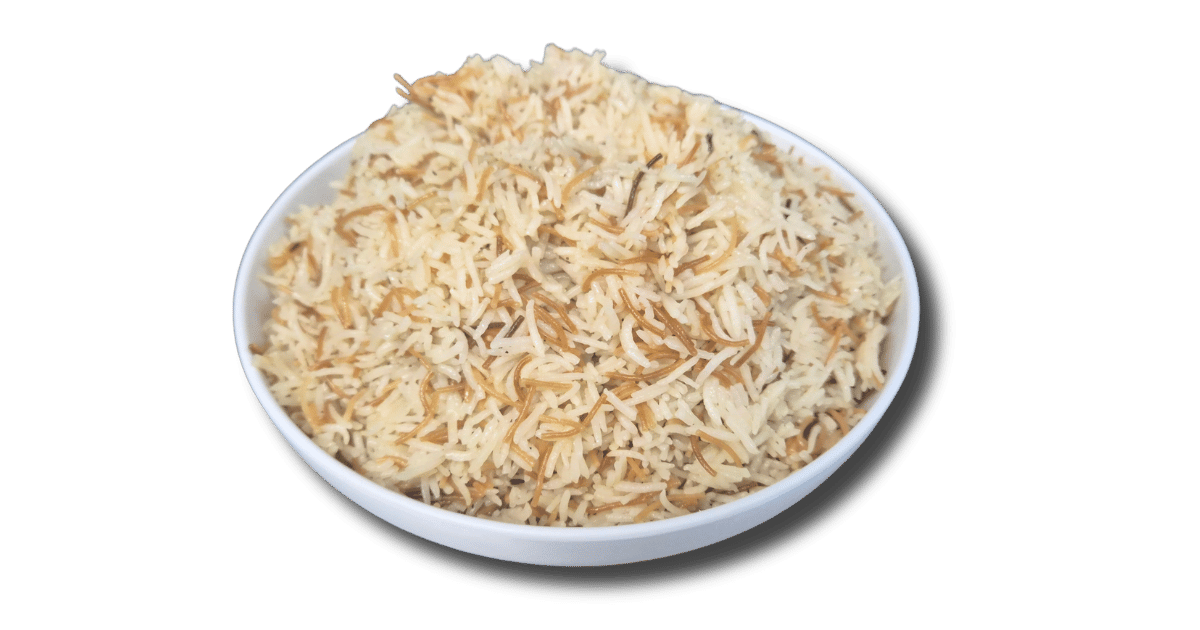
Of all the rice dishes we make, this is the one that shows up at every table. Weddings, Sunday dinners, a plate of kabob on a Tuesday. It's rice pilaf with butter-browned vermicelli, and in our kitchen it goes next to almost everything.
It takes six ingredients and one pot. The technique is what makes it great.
What Is Sheyriyeh Pilaf?
Sheyriyeh is the Arabic name for the thin noodles, and rice with vermicelli (riz bi sh'ariyeh) is a staple across the Levant. In Armenian homes from Aleppo, it's simply pilaf, the everyday rice that sits beside everything else on the table.
The noodles get toasted in clarified butter until they're deep golden. Then the rice goes in, then hot chicken broth. You get fluffy, separate grains with little toasty, nutty bits running through every spoonful.
Start With Your Hands
Good pilaf starts with washing the rice. Cover it with cool water, swirl it with your hands and pour off the cloudy water. Do that three or four times, until the water runs almost clear.
That cloudiness is loose starch. Leave it on and the rice turns sticky. Wash it off and every grain stays on its own.
Use regular long-grain white rice. Jasmine and basmati both work. Skip converted (parboiled) rice. It cooks differently and won't give you the same texture.
Brown the Noodles Low and Slow
Melt clarified butter over low heat, add the vermicelli and keep stirring. In 4 to 6 minutes it turns deep golden brown and smells like toasted nuts.
This is where the flavor comes from, so don't rush it and don't walk away. Pale noodles taste like nothing. Burnt noodles make the whole pot bitter.
Clarified butter (ghee, or samneh) is the right fat here. Regular butter has milk solids that burn before the noodles brown.
Hot Broth, Then Hands Off
Stir the rice into the butter until every grain looks glossy. Then pour in hot chicken broth. Keep it simmering in a separate pot while you brown the noodles. Cold broth stops the cooking and makes the rice gummy.
Season with black pepper and salt, give it one quick stir, and that's the last time you stir it. Taste the broth first. It should taste a little saltier than soup, because the rice soaks up the seasoning.
Bring it to a gentle simmer and leave it uncovered. Watch the surface. When the liquid drops below the top of the rice and little steam holes open up across it, you're ready for the final step.
The Towel Trick
Turn off the heat. Lay a clean kitchen towel over the pot, put the lid on tight and fold the towel corners up over the lid so they're nowhere near the burner.
Now leave it alone for 30 minutes.
The towel catches the steam that would otherwise drip back onto the rice. That's the difference between fluffy pilaf and wet pilaf. If you're on an electric stove, slide the pot to a cool burner, since the coil stays hot after you turn it off.
After 30 minutes, fluff it with a fork, lifting from the bottom so the browned noodles spread through the rice.
What to Serve It With
Pilaf goes with just about everything: chicken or beef kabob, shawarma, kofte, stews, roast chicken, or simply a bowl of yogurt and a salad. At ANI Catering & Cafe, it's one of the most-ordered sides on our catering trays.
Storage and Reheating
Cool leftovers quickly and refrigerate up to 4 days. Reheat covered with a splash of broth or water so the grains steam back to life. Pilaf also freezes well for up to 2 months.
Key takeaways
- Wash the rice with your hands until the water runs almost clear.
- Brown the vermicelli low and slow in clarified butter until deep golden.
- Only hot broth goes in, and you stop stirring once it's in.
- Towel under the lid, heat off, 30 minutes, no peeking.
FAQ
Can I use regular butter? Clarified butter is best because it won't burn. Regular butter works if you keep the heat low, but watch it closely.
Can I make it vegetarian? Swap the chicken broth for a good vegetable broth. The method stays the same.
Why is my rice mushy? Usually the rice wasn't washed, it got stirred after the broth went in, or the lid went on without the towel.
Why is my rice crunchy in the middle? The lid wasn't tight or someone peeked. Sprinkle a few spoonfuls of hot broth over the top, cover again and give it 10 more minutes.
Scale it
Ingredients
Method
- Wash the riceCover the rice with cool water and swirl it with your hands. Pour off the cloudy water and repeat 3 or 4 times, until the water runs almost clear. Drain well in a strainer.
- Heat the brothBring the broth to a simmer in a separate pot and keep it hot.
- Brown the vermicelliMelt the clarified butter in a heavy pot over low heat. Add the vermicelli and stir constantly for 4 to 6 minutes, until it's deep golden brown and smells toasty. Don't walk away. It goes from gold to burnt fast.
- Coat the riceAdd the drained rice and stir for 1 to 2 minutes, until every grain is glossy with butter.
- Add the hot brothPour in the hot broth (it will hiss), add the black pepper and salt, and give it one quick stir. Taste the liquid. It should be a little saltier than soup.
- SimmerTurn the heat up just enough to keep a gentle simmer. Don't stir. Cook uncovered until the liquid drops below the top of the rice and little steam holes open across the surface, about 8 to 12 minutes.
- Towel, lid, waitTurn off the heat. Lay a clean kitchen towel over the pot, put the lid on tight and fold the towel corners up over the lid. Leave it alone for 30 minutes. No peeking.
- Fluff and eatFluff with a fork, lifting from the bottom so the browned noodles spread through the rice. Serve hot.
Tips
- Color is flavor. Brown the vermicelli low and slow until it's deep golden. Pale noodles taste like nothing. Black ones taste bitter.
- Hot broth only. Cold broth stops the cooking and the grains go gummy.
- Hands off after the broth. Stirring releases starch and makes the pilaf sticky.
- The towel matters. It catches the steam that would drip back onto the rice, so every grain stays separate.
- Electric stove? The burner stays hot after you turn it off. Slide the pot to a cool burner for the 30-minute rest.
